


Service
Maritime Business Planning
Developing island nations such as the Philippines and Indonesia rely on domestic shipping as the core of their transportation infrastructure. In these countries, the modernization of domestic shipping is one of the most important issues for national economic development. Japan Marine Science is engaged in various initiatives to support the modernization of maritime industries in these countries.
Purpose
- Support the modernization of maritime industries in developing island nations
Background of Developing Island Nations
In developing island nations such as the Philippines and Indonesia, domestic shipping is a key industry supporting transportation infrastructure. Lifeline routes to remote islands are operated by the government or with government subsidies.
In the Philippines, 99.7% of domestic cargo is transported by sea. However, 60% of domestic vessels are small or traditional wooden boats. Even steel vessels are mostly imported second-hand ships, many over 20 years old, making them inefficient and unsafe. In Indonesia, most domestic vessels are also small, and inefficient transport is a challenge.
Given this background, the modernization of domestic shipping is considered one of the most important issues for national economic development in island nations.
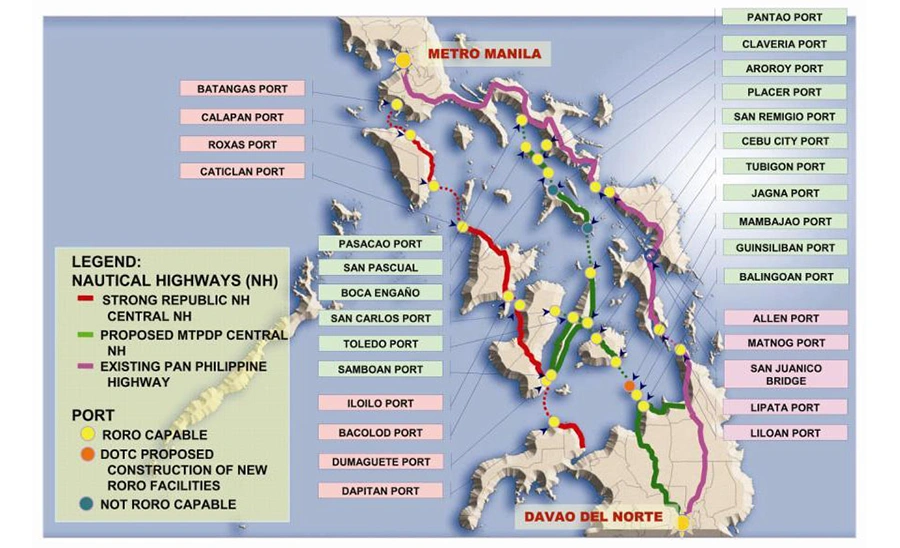
ODA Maritime and Inland Waterway Planning for Developing Countries
Maritime development in developing countries mainly involves building or modifying vessels. Japan Marine Science conducts demand forecasting by considering cargo and passenger transport statistics, economic trends (GDP, industrial structure, etc.), and the fact that vessels call at multiple ports, incorporating hinterland development plans. This enables the calculation of appropriate vessel allocation plans, fleet size, and vessel sizes.
If implemented as an ODA project, a comprehensive plan including vessel and port development is formulated. If technical cooperation for vessel operation and management is needed, support is provided based on the ISM Code and other standards.
Research on Regulations for Safe Navigation of Vessels
In many developing countries, there are no established standards to ensure the safety of vessels navigating domestic waters. Even if standards exist, they are often insufficient, leading to an increase in aging and substandard vessels and a lack of vessel inspection systems. Many imported second-hand vessels are illegally modified, with maximum capacity and navigation areas not being observed. These are clearly causes of maritime accidents.
Japan Marine Science investigates the presence or absence of vessel safety standards, local weather and sea conditions, and proposes navigation area settings and other measures. We establish a foundation for safety standards based on Japanese regulations.