Service
Seafarer Training Equipment
About 80% of ship accidents are said to be caused by human error, and international safety standards for ship operations are being strengthened. As a result, the demand for seafarers who meet international standards is increasing. Japan Marine Science provides support for the installation of seafarer training equipment and simulator training for seafarers in developing countries.
Purpose
- Provide seafarer training materials to developing countries
International Standards for Seafarer Qualifications
International standards for seafarer qualifications are defined by the International Convention on Standards of Training, Certification and Watchkeeping for Seafarers (STCW Convention) of 1978. Based on this convention, governments of member countries operate or supervise seafarer education and training institutions, foster qualified seafarers, and issue certificates of qualification.
Current Situation in Japan
In accordance with the STCW Convention, many countries' seafarer training institutions provide education and training, producing both domestic and international seafarers. However, in developed countries, the employment of foreign seafarers, who are less costly, has become mainstream due to the decline in domestic seafarers. In Japan, 95% of merchant ship seafarers are foreigners, with 75% being Filipino, making them indispensable to Japanese shipping.
Support for Government ODA Seafarer Education Projects
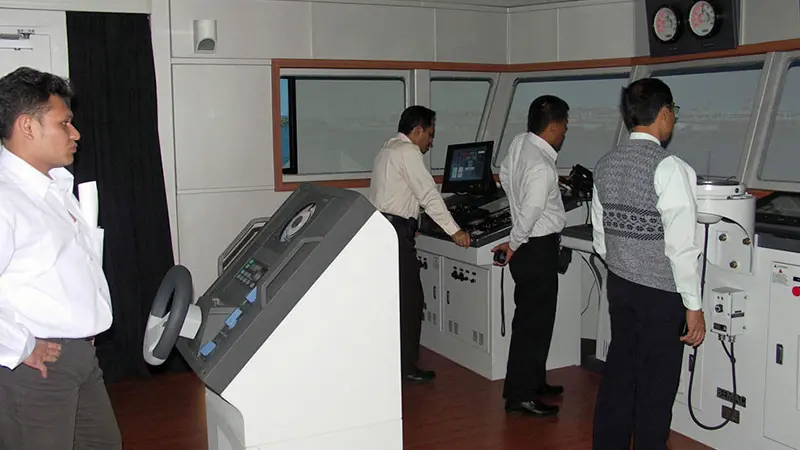
Ship technology is advancing daily, and the requirements of the STCW Convention are becoming stricter. However, many seafarer training institutions in developing countries provide education without sufficient training equipment and issue certificates of completion. Therefore, government ODA seafarer education projects plan to install or update training equipment such as buildings, navigation/engine/cargo simulators, ECDIS, GMDSS, and safety training equipment like lifeboats and fast rescue boats.
Japan Marine Science conducts surveys and supports contractor selection and construction management to create specifications for various training equipment according to regulatory requirements and requested levels. We support the development of qualified seafarers in developing countries.
Simulator Training for Seafarers in Developing Countries
Seafarer training institutions in developing countries often lack sufficient instructors. Furthermore, the quality, ability, and knowledge of instructors may be inadequate, making it urgent to develop instructors who can provide training in accordance with the STCW Convention.
To obtain seafarer qualifications, a certain period of onboard training is required, but developing countries often lack dedicated training ships. Currently, they rely on merchant ships for onboard training, which is insufficient, and the number of available merchant ships is limited.
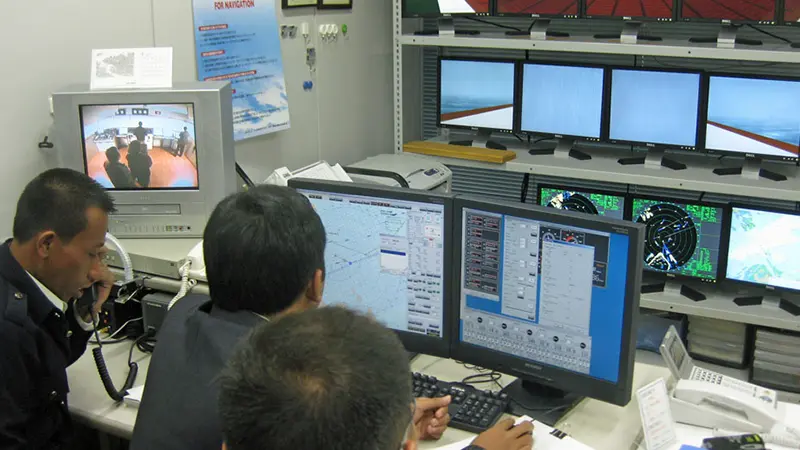
Japan Marine Science provides various training programs using its own simulators as part of ODA projects. Achievements include providing training to seafarer training institutions under the Indonesian Ministry of Education and Training.