


Service
Navigation Safety and Disaster Prevention
Ports are required to provide a safe environment for all vessels using the waters, ensure stable logistics, and prevent marine pollution.
Accidents involving large vessels can lead to significant damage.
Japan Marine Science conducts surveys and evaluations related to the safety of ports and waters, and supports various safety measures.
Importance of Navigation Safety and Disaster Prevention
When maritime accidents occur, the spillage of fuel, oil, LNG, etc., causes marine pollution and severe damage to the natural environment and ecosystems. The impact on fisheries, vessel traffic, and shipping is also significant, with immeasurable social consequences.
Therefore, it is important for every port to safely accommodate vessels and to develop and plan quay and water area facilities and safety measures that all port users can use with peace of mind.
Purpose
- Prevent maritime accidents such as vessel collisions and groundings
- Plan and develop quay facilities that can safely accommodate vessels
- Simulate the entry of large vessels
- Consider disaster prevention measures for dedicated hazardous material piers
- Assess the impact of new offshore facility construction on vessels
Service Details
We conduct surveys of quay and water area facilities at ports and evaluate the safety of ship handling and mooring. Using scientific methods such as ship handling simulations and mooring motion simulations, we propose both soft measures (support, operational standards, guideline formulation) and hard measures (facility improvement plans) necessary for safe and secure ports.
Service
01
Navigation Safety Measures for Large Vessel Entry and Departure
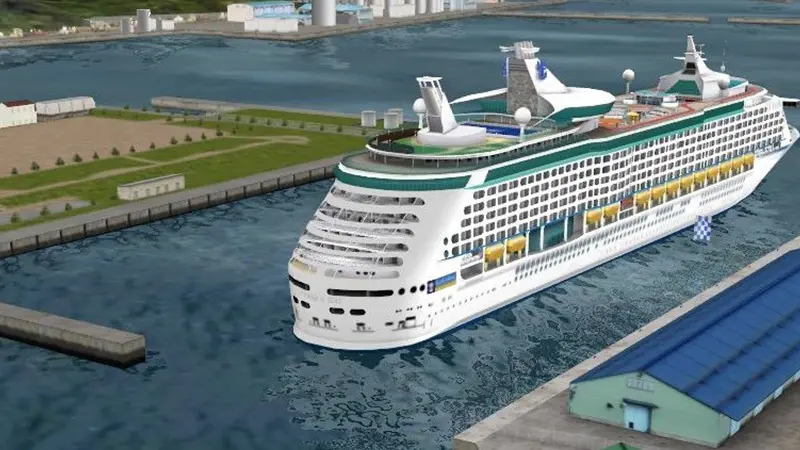
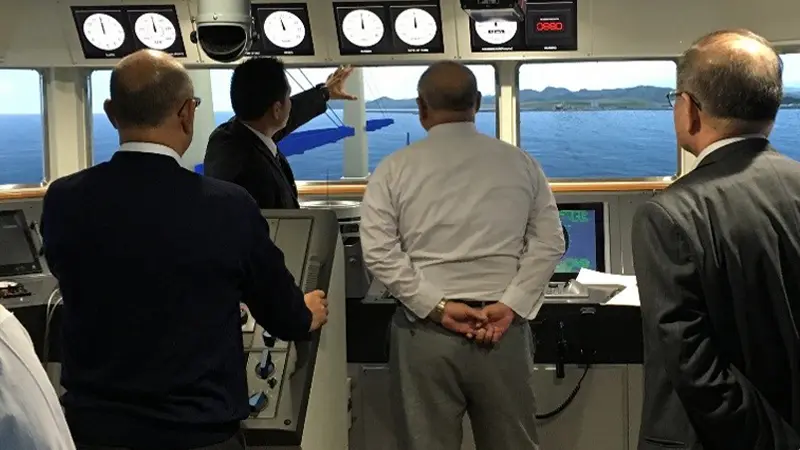
We conduct surveys of quay and water area facilities at ports and evaluate the safety of ship handling and mooring. Using scientific methods such as ship handling simulations and mooring motion simulations, we propose both soft measures (support, operational standards, guideline formulation) and hard measures (facility improvement plans) necessary for safe and secure ports.
Service
02
Marine Disaster Prevention Measures for Dedicated Hazardous Material Piers (Tsunami Countermeasures, etc.)
After the Great East Japan Earthquake, disaster prevention and mitigation measures for dedicated hazardous material piers in the event of earthquakes and tsunamis have been considered. Tankers and LNG carriers carrying highly flammable cargo moored at these piers are also operated under stricter safety standards.
At Japan Marine Science, we evaluate the feasibility of continued mooring and mooring reinforcement measures under predicted flow conditions during a tsunami using mooring motion simulations. We also use ship handling simulations to consider emergency unberthing and evacuation methods after an earthquake. We support the formulation of guidelines that indicate decision-making and action standards during tsunami events.
Service
03
Navigation Safety Measures Related to Port Infrastructure Development
We conduct preliminary surveys on the impact of port infrastructure development projects, such as airports, bridges, and offshore wind power facilities, on vessel navigation.
At Japan Marine Science, we first understand the actual maritime traffic through vessel traffic surveys. Next, we use simulations to predict the traffic environment during and after construction and evaluate the safety of the navigation environment. If there are concerns about the impact on ship handling, we conduct ship handling simulations under future traffic conditions to evaluate safety, and then consider measures to ensure the safety of the sea area.